
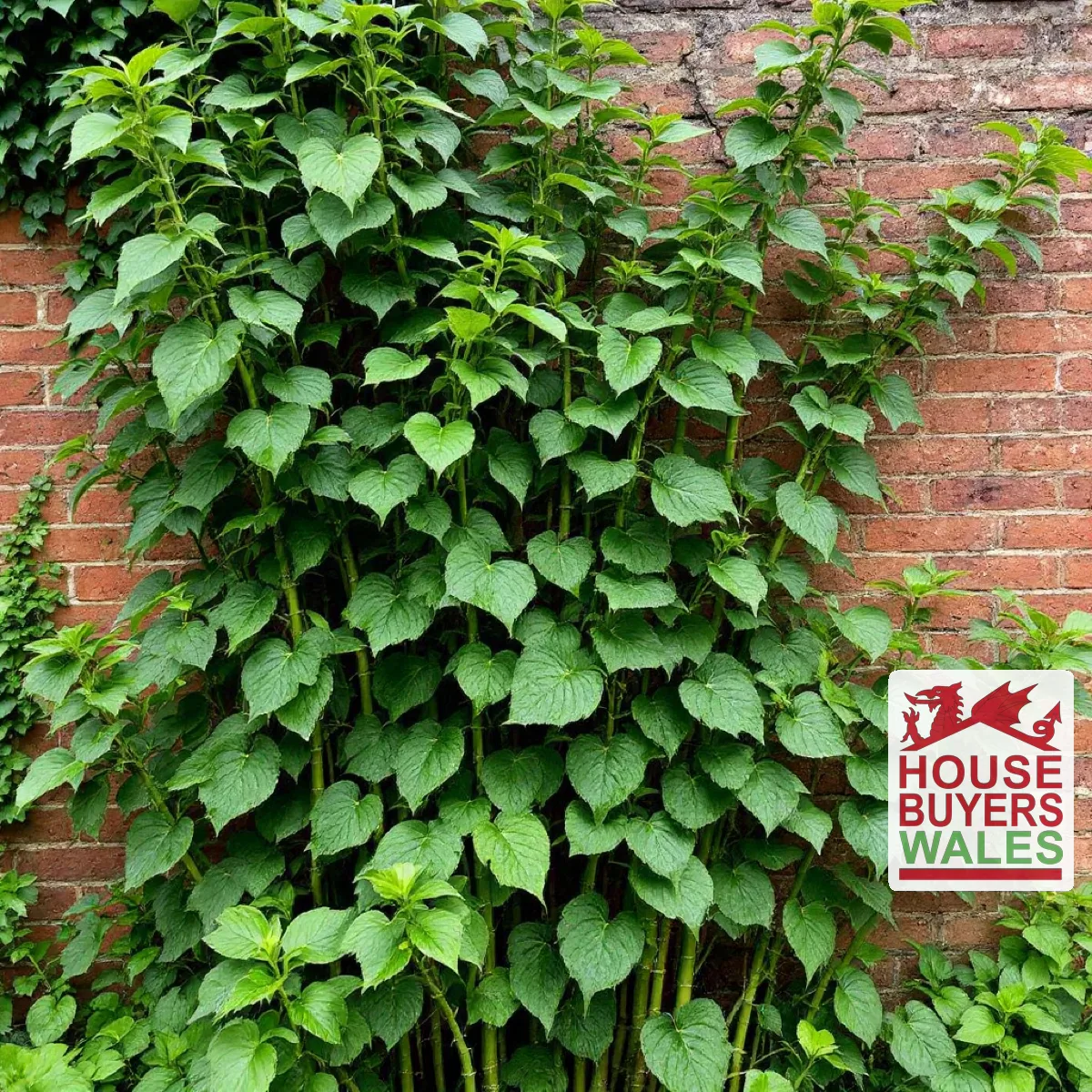
Can you sell a house with Japanese knotweed?
Yes — but it’s harder on the open market, because many mortgage lenders won’t lend on a property with knotweed, and the few that will insist on a costly professional treatment plan with an insurance-backed guarantee in place.
Knotweed doesn’t make a house unsellable; it narrows who can buy it and how quickly. Indeed, the majority of buyers (both traditional owner-occupier and investors) who need a mortgage will struggle to get a mortgage if your home is affected by Japanese knotweed.
We’re David and Jason. We buy houses with knotweed across South Wales regularly, so here are the facts without the scaremongering.
What Japanese knotweed actually is
It’s a fast-growing invasive plant with bamboo-like stems and heart-shaped leaves. It dies back in winter and surges in spring/summer. It can push up through hard surfaces and is genuinely difficult to kill — as the knotweed moves closer to the property, serious structural damage can result. Even if the knotweed has not yet breached the building itself, the bigger problem at sale time is mortgageability — whether your buyer will be able to find a lender that is willing to risk writing a loan against the property.
Why it complicates a normal sale
- Lenders get nervous. Many lenders simply will not lend against a property affected by Japanese knotweed. The handful of lenders who might consider doing so will require an expensive treatment plan from a specialist with a transferable, insurance-backed guarantee (often 10+ years, with paid annual surveys and treatments) before they’ll lend.
- Surveyors must flag it. A RICS survey will note knotweed, which will spook most buyers, particularly a buyer reliant on mortgage funding (i.e. the vast majority of buyers).
- Japanese knotweed will almost certainly negatively affect value while unless it is completely eradicated professional (which is often cost-prohibitive, because doing so can involve deep excavations and specialist removal and disposal (it cannot be disposed of via normal means, due to its spread-risk).
Your legal position (the honest bit)
- It is an offence to allow Japanese knotweed to spread from your land onto neighbouring land or into the wild. Homeowners have successfully sued neighbours who let knotweed spread onto their property, with courts awarding damages running between £10,000-£27,000 once treatment costs and lost property value are added together, against the party whose knotweed spread.
- When you sell, the standard TA6 property information form asks whether knotweed is present. Answering dishonestly can lead to a legal misrepresentation claim later, so disclose it.
Your options
- Get a professional treatment/management plan with an insurance-backed guarantee, then try to sell on the open market. Treatment takes time (often the treatment/management programme is 10 years+ programme) and is expensive, both up-front and in the annual site surveys and treatment.
- Sell to a buyer who doesn’t need a mortgage and is prepared to take on the risk. House Buyers Wales buys with our own funds, so a lender’s view of the knotweed doesn’t apply. We factor the existence of Japanese knotweed and a treatment/management plan into our offer, allowing you to dispose of the property quickly before the problem and associated risk worsens.
Selling as-is
If you’d rather not spend months and money on a treatment programme before you can even list, we’ll buy the property as it stands — knotweed and all — at a fair, fixed price, so you can side-step the ongoing ownership risk, and quickly. No survey-driven price drops, no waiting on a lender.
Want a fair offer on a property with knotweed?
House Buyers Wales are South Wales’ #1 Trusted Property Cash Buyers — rated 5-stars by hundreds of real home sellers.
Don’t take our word for it: Read real customer reviews for House Buyers Wales →
Get your free cash offer → — 30 second enquiry form, no commitment, no pressure.
Or call 02920 001331 to speak to David or Jason, not a commission salesperson.
Related: